Calling a Professional
A day and a half per week wasted on commits and reviews. The fix is not more effort. It is calling a specialist.
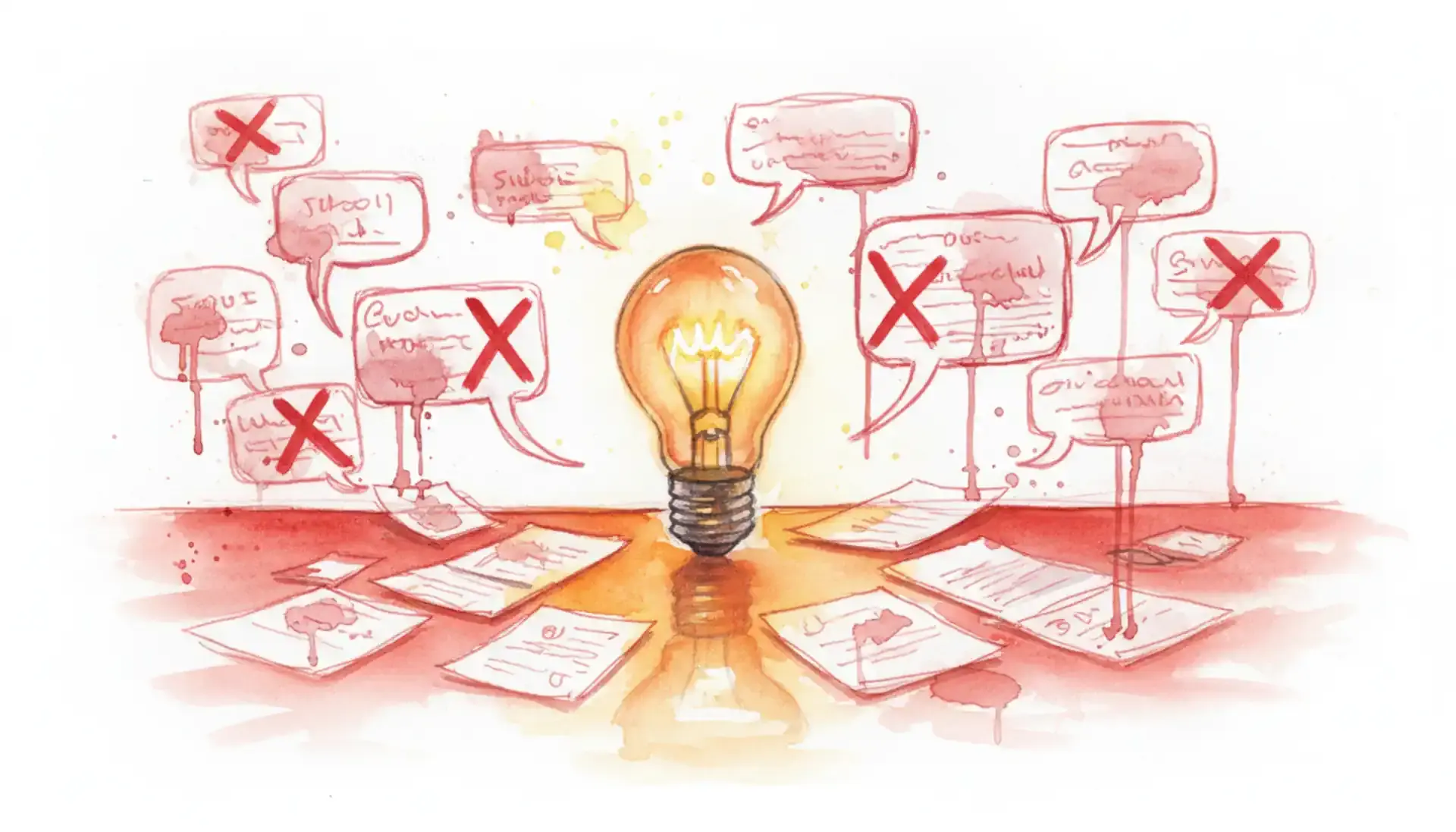
Count the hours you are not getting back. Every pull request needs a commit message. Every merge needs a review. Every release needs a security audit. None of this work ships features. None of it moves the product forward. But someone has to do it, so you do it. Over and over, across every project, every sprint, every year.
That is the silent productivity tax. It does not show up on a roadmap. No stakeholder ever asks about it. It just sits there, quietly eating a day and a half out of every week. Multiply that across a team of five, and you are losing nearly two person-months every quarter to work that a specialist should be handling.
Here is the part that should bother you. In any other industry, you would not accept this.
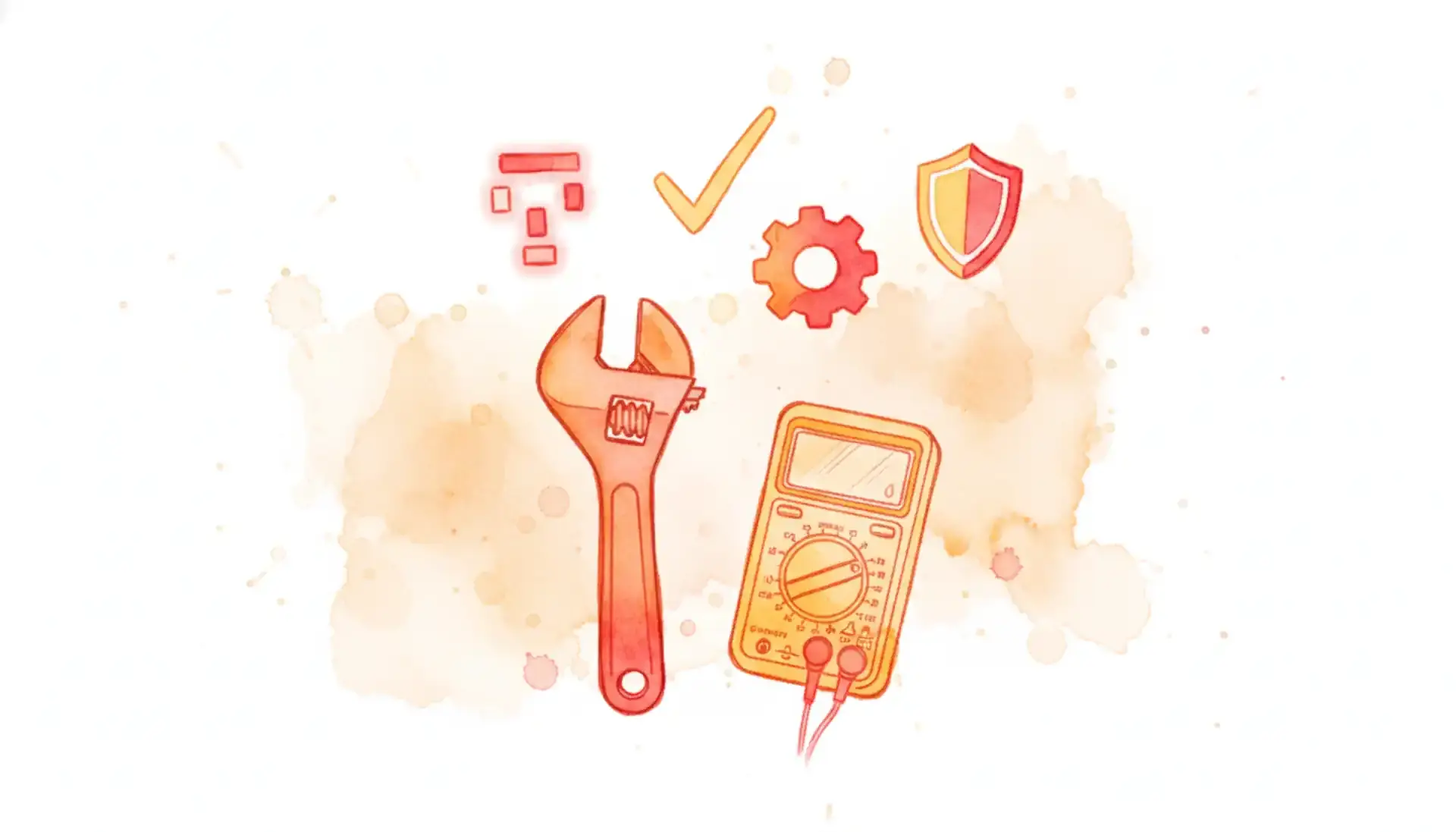
If your kitchen sink backs up, you call a plumber. If the wiring in your office shorts out, you call an electrician. You do not pull up a video tutorial and start figuring it out yourself. You do not spend half your week learning the trade just to do it once. You pick up the phone. The specialist arrives with the tools, the training, and the instincts. They do not need you to explain how pipes work or where the breaker panel is. They already know. They get it done, and you get back to your actual job.
Software development is the only profession where we decided this model does not apply.
Most developers try to do everything alone. Database work. Frontend work. Backend work. Testing. Security audits. Commit messages. Code reviews. The list never ends. Every one of these tasks gets done by hand, from scratch, every single time. Not because it has to be. Because we never stopped to ask whether someone else should be doing it.
That is what makes the current wave of AI tooling interesting. Not the chatbots. Not the autocomplete. The part that matters is the shift from one general assistant to a team of specialized agents.
Think of these agents as your electricians and plumbers. Each one is a reusable system of specialized instructions built directly into your workflow. When you trigger one, it does not just answer a question. It transforms into a domain expert for the exact task at hand. A commit-writing specialist who reads your diff, understands your context, and writes a clean conventional commit message. A code review specialist who scans every change against established best practices and edge cases. A security specialist who spots vulnerabilities before they reach production.
The key difference from a general AI chat is that these specialists arrive pre-loaded. They already know the best practices. They already understand the edge cases. They already recognize the patterns specific to their domain. You do not handhold them. You do not explain the pipes or the wiring. You make the call, and they show up ready to work.
This works today because the mechanism is simple. Each specialist is a plain prompt file, a set of focused instructions stored in a config directory. No cloud dependency. No complex setup. A single short command triggers the workflow, and the agent handles the rest. The specialist reads the context, executes the task, and you move on to the next real problem.
The examples are straightforward. Commit writing agents that produce conventional commit messages from your staged changes. Code review agents that flag logic errors, missed edge cases, and style violations before a human ever looks at the PR. Frontend design agents that generate production UI without you sketching every state and breakpoint by hand. Test-writing agents that produce coverage for the paths you forgot. Security audit agents that run through common vulnerability patterns faster than any manual checklist.
The pattern is the same across all of them. You stop being the person who does everything. You start being the general contractor who knows exactly who to call.
That mental shift is worth more than any single tool. It changes how you think about your own time. Every repetitive task you are still doing by hand is a decision you are making, consciously or not, to spend your most limited resource on something a specialist could handle in seconds. The cost compounds. A day and a half per week becomes six days per month. Six days per month becomes eighteen days per quarter. That is nearly a full sprint spent on chores.
The engineers who will thrive in the next decade are not the ones who do the most. They are the ones who know what not to do. They build their crew, delegate the routine, and put their own attention where it actually makes a difference.
You would not rewire your own office. Stop doing the equivalent for your codebase.
Disclaimer: All content reflects my personal views only and does not represent the positions, strategies, or opinions of any entity I am or have been associated with.