The Architect and the Apprentice: A Story of Guidance and Growth
It was the dawn of a new tool for me. I remember the day clearly. The new agentic coding tool called Cursor was just coming out. It was new. It was fresh. At the same time, I faced a mountain of work. I had to refactor a huge codebase. This code was written in a hurry. It was messy. It was full of shortcuts. The deadline was tight. I looked at the screen and I felt a heavy weight in my chest.
I asked myself a question. Without this new tool, could I fix it in time? The honest answer was no. I would have failed. The code was too big. The logic was too tangled. But with Cursor, I had a chance.
However, the story is not simple. I did not just press a button and walk away. I had to hold Cursor's hand every step of the way. I had to guide it. I had to explain the context. I had to check every line. It was not magic. It was a partnership.
Have you ever felt this tension? The feeling that the machine is powerful, but it needs a human to steer it?
I remember another time. I was debugging an old library. It was ancient code. The documentation was gone. The comments were wrong. Without Cursor, I knew the truth. It would have taken me days. Maybe weeks. I would have stared at the screen until my eyes burned. I would have guessed. I would have failed.
But with Cursor, the mystery vanished. It found the issue. It showed me the path. The time that was once weeks became hours.
This made me think about the conversations I'd been having lately. In team meetings, in Slack channels, in late-night chats with other engineers. The speakers were worried. They talked about ethics. They talked about artists losing their jobs. They worried about the "human voice." They said AI creates "artifacts" without "meaning." They said we must protect the human spirit from the machine.
They asked hard questions. They said AI is not like human learning. They said it is just math. They said it creates "junk."
I listened to their worries. But then I looked at my own work. I asked myself: What is the human value in software engineering?
The answer is clear to me. The human value is still very important. AI is not there yet. It cannot replace the architect. It cannot replace the vision. We need to guide it. We need to be the captains of the ship.
But is the ship worth sailing? Yes, and very helpful ship in fact.
The community worried about the "scale." They said AI will flood the world with garbage.
I must be honest with you. I would be lying if I said AI has not generated Junk code, but you can minimize it if you help it along the way.
When I hold its hand, when I guide it, when I check its work, the junk is still there, but less. The result is better than what I could do alone, but it is not perfect yet.
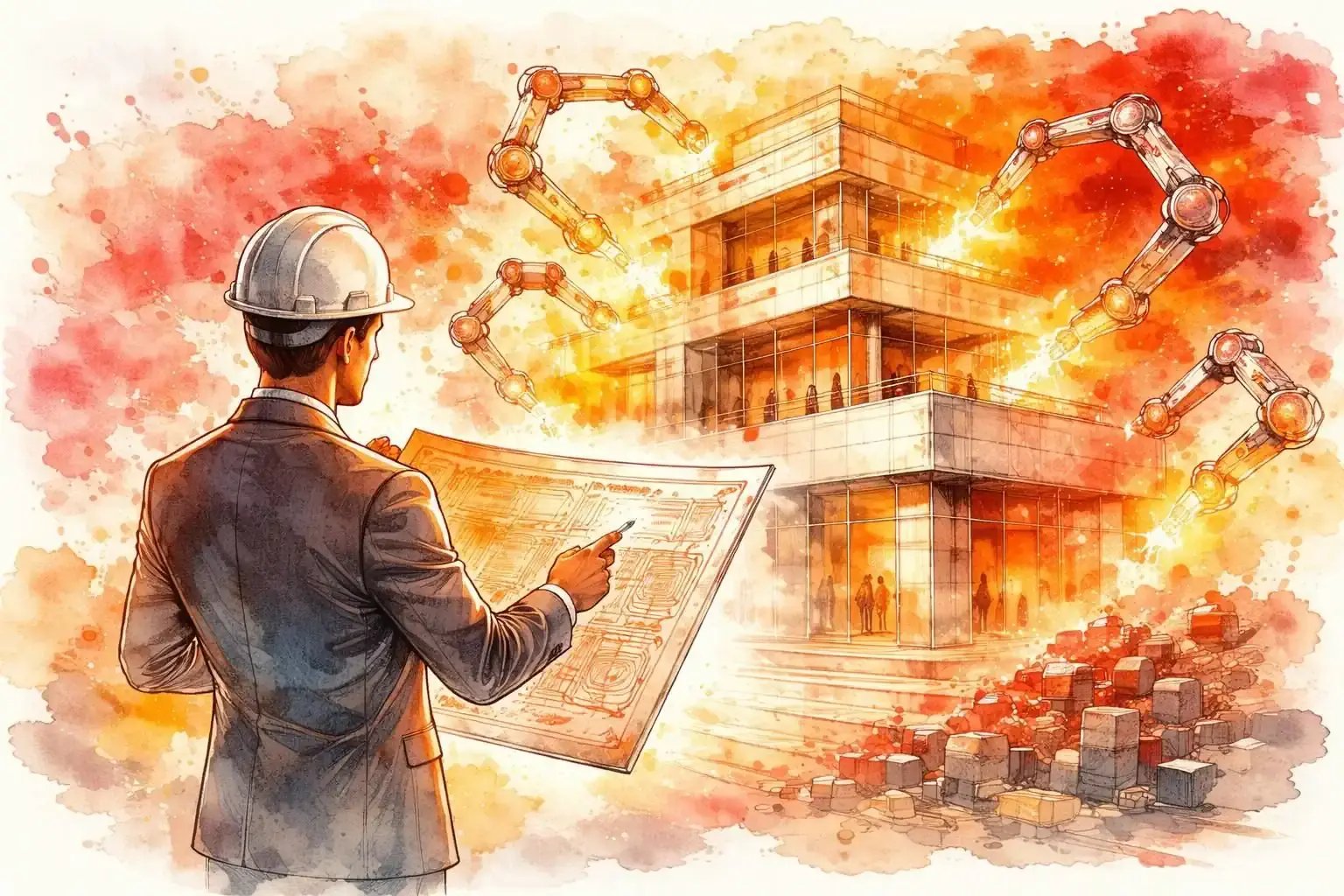
But I feel something different. I feel like an architect.
When I was just typing code, I felt like a bricklayer. I laid the bricks. I mixed the cement. It was hard work. It was necessary work. But it was not the whole story.
Now, with AI, I am the architect. I draw the blueprints. I design the structure. I decide where the walls go. I decide how the light enters. The machine lays the bricks. The machine mixes the cement.
Does this make me less human? No. It makes me more human. It frees me to think. It frees me to design. It frees me to solve the big problems.
During those discussions, someone mentioned the game of chess. They said that once AI became unbeatable, humans were free to just play. They said we stopped worrying about winning and started enjoying the game.
I feel the same way. I am not fighting the machine. I am not trying to beat it. I am using it. I am building with it.
When I think about the future of my job, do I feel fear? No. I feel excitement.
I feel excitement because the barriers are lower. I feel excitement because the possibilities are higher. I feel excitement because I can build things that were impossible before.
The industry talks about the "ecosystem." They say if we let AI eat all the mice, the owls will die.
But in engineering, the ecosystem is not about eating. It is about building. It is about creating.
If AI eats the boring work, then the engineers can build better things. If AI eats the repetitive work, then the engineers can think deeper. If AI eats the mistakes, then the engineers can focus on the vision.
I asked myself: Do I want to spend my life writing the same code over and over? No. I want to build new things. I want to solve new problems. I want to create new systems.
AI is the tool that lets me do this.
The broader conversation says we must protect the "human voice." They say art is a human saying something. But in engineering, the code is the voice. The system is the voice. If the system works better, if the system is faster, if the system is safer, then the voice is louder.
The tool does not matter. The result matters.
I looked at my screen again. The legacy code was refactored. The old library was fixed. The system was clean. It was fast. It was beautiful.
I smiled. I felt happy. I felt powerful.
Those who were worried asked hard questions. But I have the answer.
The answer is not that AI is the best today. The answer is that AI is getting there. It is good. It is becoming better.
It is good because it frees us from the boring parts. It is good because it scales our creativity. It is good because it lets us focus on the big picture. It is good because it makes the impossible, possible.
We do not need to fear the robot owls. We need to welcome them. We need to let them eat the bugs. We need to let them write the tests. We need to let them handle the scale. Then, we can sit back, relax, and do what humans do best. We can think. We can dream. We can build the future.
The next time you face a huge codebase, do not be afraid. Do not feel the weight. Smile. Ask your AI assistant to help. Hold its hand. Guide it. Watch as the magic happens.
Because AI is getting there. And it is only getting better.
The future is here. The future is AI. And the future is bright.
So, what is the conclusion?
The conclusion is simple. AI is not the best yet, but it is very good. It is getting there.
It is the best friend of the engineer. It is the best tool for the builder. It is the best partner for the creator.
Let us use it. Let us build with it. Let us create with it.
Because AI is getting there. And it is only getting better.
Disclaimer: All content reflects my personal views only and does not represent the positions, strategies, or opinions of any entity I am or have been associated with.