The Layer That Makes It Last
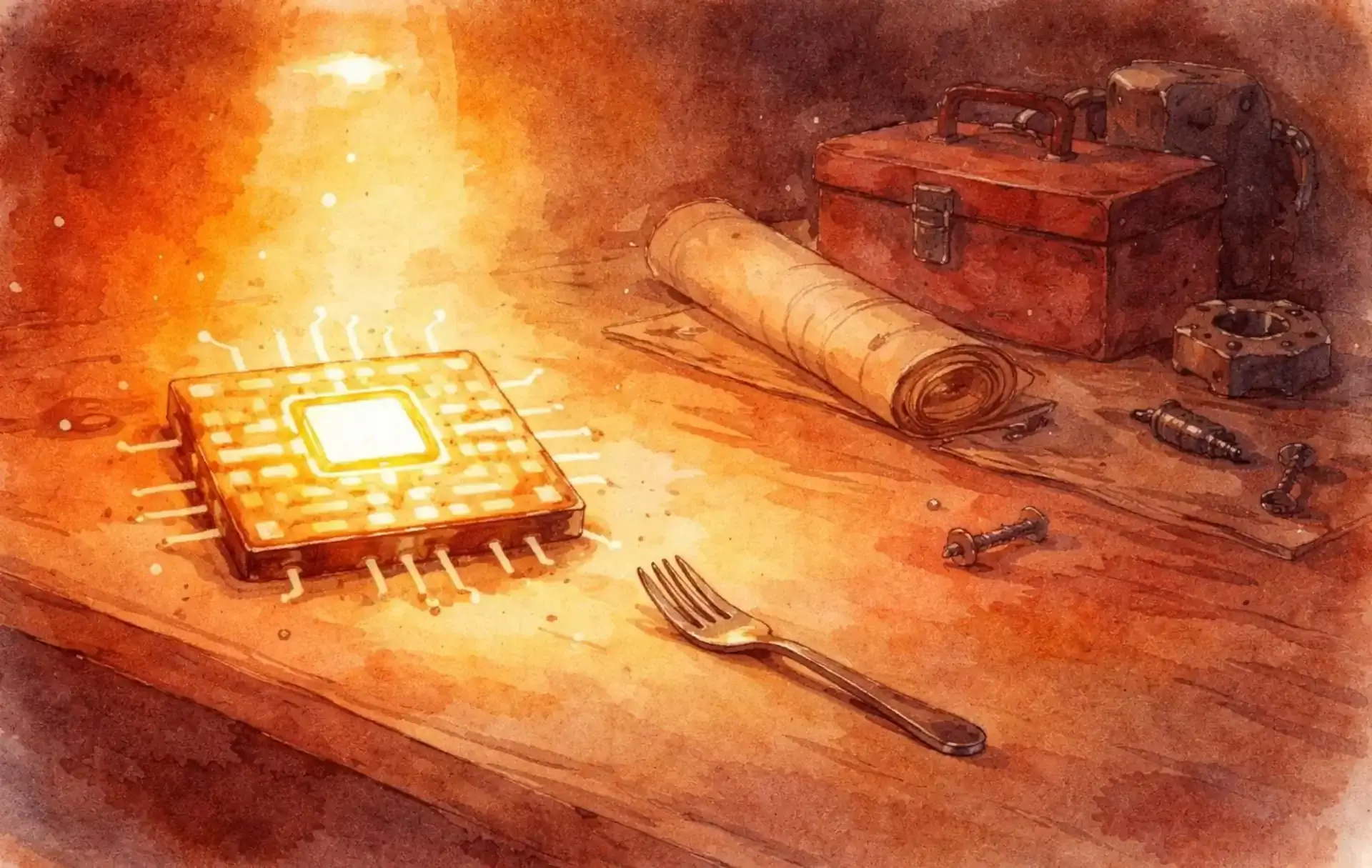
Nobody says medicine changed the world because scientists discovered penicillin. Medicine changed the world because we built the hospitals where it could be administered, trained the doctors who could prescribe it, established the frameworks that ensured it was safe, and created the systems that made it accessible. The breakthrough was necessary. The layer around it was what made it last.
AI is at that same inflection point.
Artificial intelligence has been around since the 1950s, but the past few years have been extraordinary. AlphaFold solved the 50-year-old problem of predicting protein structures, a breakthrough hailed as one of the most significant advances in biology. AI imaging tools now detect breast cancer up to five years before a clinician might catch it. Real-time speech recognition gives deaf and hard-of-hearing communities access to conversation they never had before. AI models improve climate forecasting, agricultural yields, and earthquake early warning systems. The technology is working. The breakthroughs are real.
The question now is not whether AI can deliver. It already is. The question is what we build around it.
Every major technology in history followed the same arc. The spark comes first. The infrastructure comes next. Electricity did not change the world when the first lightbulb lit up. It changed the world when we built the power grids, standardized the voltages, and wired every home and factory. The internet did not change the world when the first packet was sent. It changed the world when we built the protocols, the browsers, the payment rails, and the undersea cables. The technology was the spark. The layer around it was the fire.
AI is entering its infrastructure phase. That is not a problem. It is the opportunity of a generation.
So what does that layer look like?
First, talent pipelines that sustain innovation over decades. AI will create new categories of work, just as every major technology shift before it has. The companies and economies that invest early in the skills, the training programs, and the educational pathways for those new roles will be the ones that lead. That investment is not a cost. It is the difference between capturing the value of a technological shift and watching it happen somewhere else.
Second, clear standards that let builders ship with confidence and users adopt with trust. I am not talking about heavy-handed restrictions. I mean the predictable frameworks that every mature industry depends on. Construction has building codes. Aviation has safety protocols. Finance has reporting standards. These do not slow industries down. They are the rails that let them move fast without derailing. AI deserves the same clarity. Companies that know the rules can plan. Users who know the protections can trust. Ambiguity serves nobody.
Third, ecosystem investment. The strongest technology companies in history did not just ship products. They invested in the open protocols, the standards bodies, the developer communities, and the partner networks that turned their products into platforms. That investment compounds. A platform with a thriving ecosystem around it outlasts any single product. The companies thinking in decades, not quarters, are already building this layer.
Fourth, economic resilience. The most innovative economies in history have also been the most resilient ones. When people can afford to take risks, to retrain, to start something new without one misstep becoming a catastrophe, innovation accelerates. That is not about handouts. It is about shock absorbers. A society that can absorb technological change without breaking is a society that can move faster, not slower.
None of this means waiting for AI to prove itself. The technology is already doing its job. The proteins are folding. The tumors are being caught. The deaf communities are communicating. The companies building these tools are pushing the frontier forward, and that momentum is worth protecting.
The systems that determine whether that technology creates broad prosperity or concentrated gains do not build themselves. They are choices. The best time to make them is not after the disruption has arrived. It is right now, while the technology is still finding its footing and the shape of the layer around it is still being decided.
I have been a software engineer since 2009. I have watched technologies arrive, dominate, and fade. The ones that lasted were never the ones with the best algorithms. They were the ones with the best systems around them. The documentation. The community. The standards. The training. The trust. The layer.
AI is not an exception to that rule. It is the rule, playing out at a scale we have never seen before. The tool is ready. The layer is what we build next.
Disclaimer: All content reflects my personal views only and does not represent the positions, strategies, or opinions of any entity I am or have been associated with.