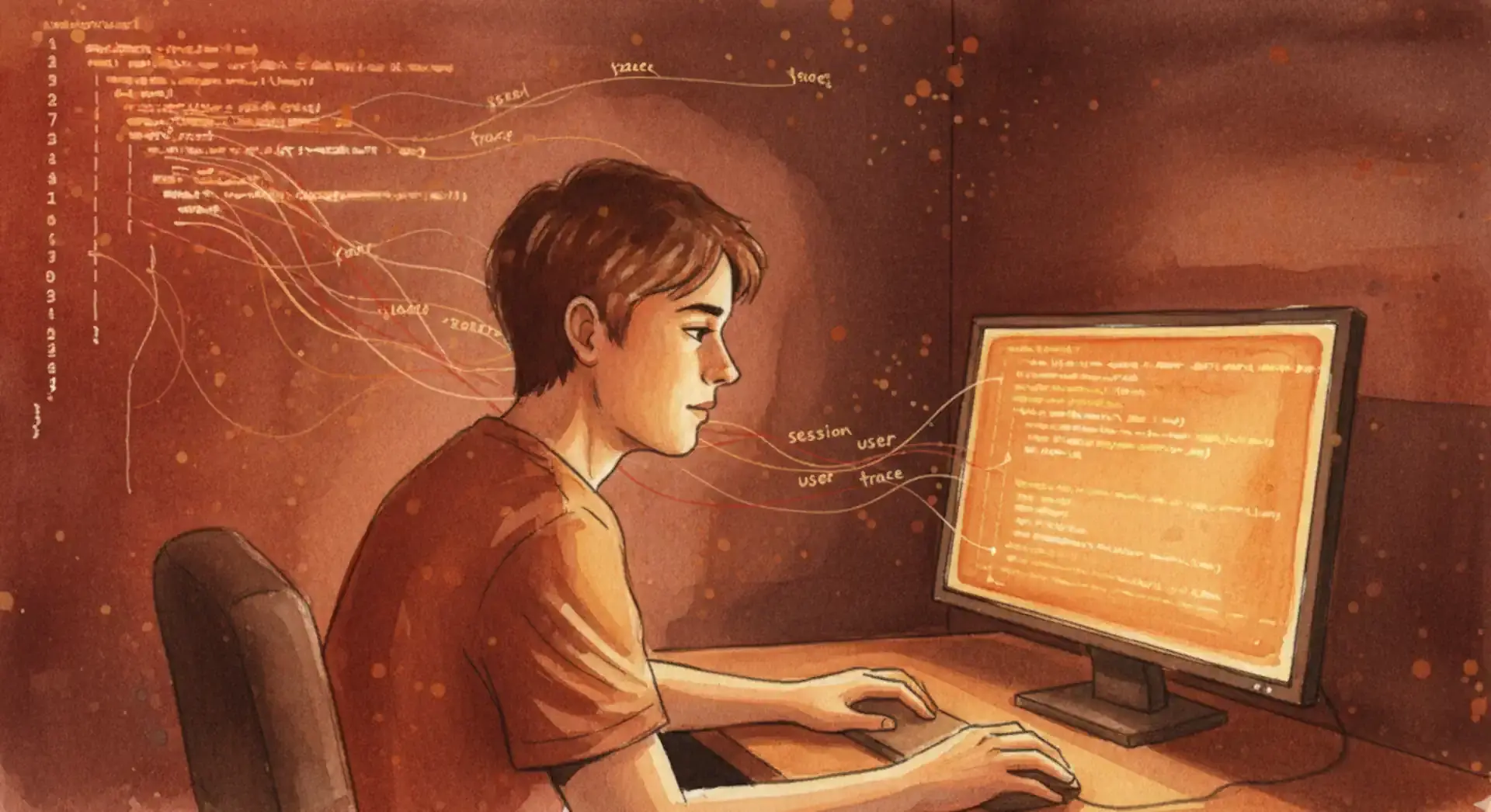
Vibes Without Protection: An AI Survival Guide for Engineers Who Still Care

I remember when the barrier to entry in software engineering was a gentle walking path. You learned a language, built a few projects, and someone hired you. These days, it feels like a major airport during a TSA outage: every gate is backed up, every alternate route is oversubscribed, and nobody is getting anywhere fast. Newcomers ask me how to break into tech, and I half-jokingly tell them to become electricians instead. At least the wiring does not change every six months.
But here is the irony. Despite all the noise, the fundamentals of software engineering have barely shifted. The tools rotate. The hype cycles spin. But the core skills sit there, patient and indifferent, waiting for you to either learn them or get exposed when it counts.
Start with tooling. Whether you write every line by hand or let an LLM generate entire modules, you still need a programming language. The landscape has settled into what I think of as the quiet three. TypeScript owns the frontend and is creeping into places it was never invited. Python remains the default for anything touching data, automation, or glue. Go has quietly become the spine of cloud infrastructure, not because it is exciting, but because it compiles fast and does not surprise you at 3 AM. React has decisively taken the frontend, and PostgreSQL has done the same for databases. These are not glamorous choices. They are correct ones. Boring technology that actually works beats exciting technology that keeps you awake at night.
Then there is the AI tooling ecosystem, which somebody described as a new tool launching every time you refresh your feed. I think of these in layers. The first is prototyping. Tools that turn a natural language description into a working application shell. They are genuinely useful for validating an idea, for getting something off the ground without spending a week on boilerplate.
The second layer is where things get risky. These are the tools that live inside your editor, writing code as you type, offering to generate entire features from a single comment. I use them, honestly. But I use them the way I used search engines a decade ago. I ask a question, I read the answer, I copy what holds up, and I discard the rest. Call it enhanced searching. I need to know what is going into my codebase because when something breaks at 2 AM, the tool that wrote it will not be the one explaining the outage.
Here is the trap. These tools feel good. They let you ship fast. They make you feel unstoppable. And because of that feeling, a terrible old metric has crawled back into fashion: lines of code. I see engineers on social platforms celebrating how many hundreds of lines their assistant spat out today. As if volume is the same thing as progress. As if we did not learn this lesson, painfully, over the previous two decades. More code means more surface area for bugs, more things to maintain, more places for failure to hide. AI does not solve that equation. It supercharges it.
The core transaction of software engineering has not changed either. You still need to understand what your code actually does. You still need to think about the edge cases that make you uncomfortable. You still need to reason about what happens when things go wrong. An LLM can write a function that looks correct and glides through the happy path, but it cannot sit beside you in the post-mortem meeting explaining why the payment system went down for three hours. That part is still yours.
This brings me to interviewing, which remains broken in its own special way. Algorithm puzzles were never about building actual software. They were a stand-in, a filtering mechanism, a ritual dressed up as fairness. AI has not fixed this. If anything, the process has gotten longer. Four rounds, six rounds, a take-home assignment that swallows your weekend, and somewhere in between, a pair programming session where you are expected to use AI tools while also proving you can think without them. The contradiction is visible to anyone who has gone through it.
What actually matters, at the end of all of this, is something quieter. It is the discipline of reading code you did not write and asking what it really does. It is the habit of testing the edge cases that make you sweat. It is the humility to admit when a generated solution looks correct but feels wrong somewhere in your gut. These are not capabilities any AI tool can hand you. They are earned slowly, through mistakes and late nights and the occasional production fire that teaches you more in one hour than a month of tutorials ever could.
The tools will keep improving, and they will keep getting genuinely better. I believe that. AI is already the best assistant any developer has ever had, and it is only getting sharper. But the craft of building reliable systems, of understanding software deeply enough to sense when it will break before it actually does, that part does not come from any tool. It comes from you. If you are starting out, learn the boring foundations first. The AI will be there waiting for you, and you will know how to aim it. If you are mid-career, let the tools accelerate you, but do not let them replace the part of your brain that asks the hard questions. Use them fully. Stay in control. And if you are the one approving pull requests written by an AI, remember that the model is brilliant, but it does not carry the pager.
Good vibes will not protect you from a production outage at 2 AM. Only your fundamentals will.
Disclaimer: All content reflects my personal views only and does not represent the positions, strategies, or opinions of any entity I am or have been associated with.